Please fill out the form below, and we will get back to you as soon as possible.
07
Apr
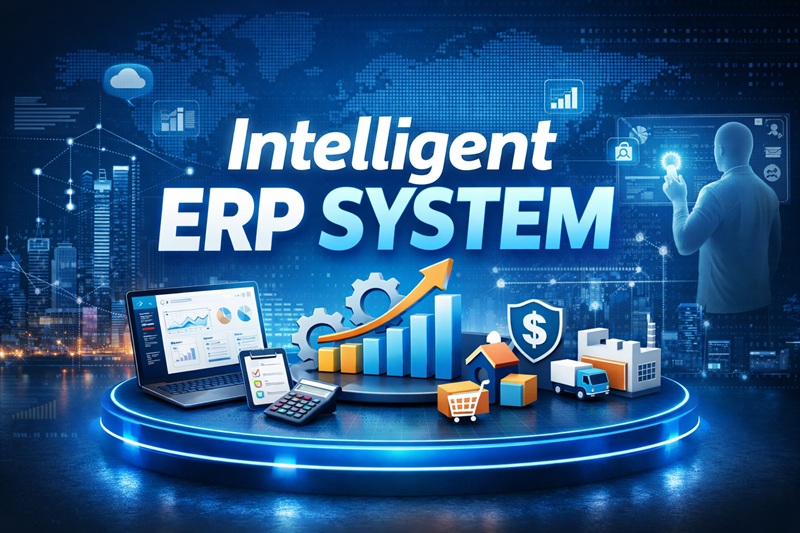
Enterprise Resource Planning (ERP) is a software system that integrates core business processes like accounting, inventory, human resources, and sales into one centralized platform. ERP is important for businesses because it improves efficiency, automates operations, provides real-time data insights, reduces costs, and helps companies make smarter decisions for growth.
In today’s competitive business environment, companies in Bangladesh are constantly looking for ways to improve efficiency, reduce operational costs, and make smarter decisions. Traditional methods like manual record-keeping, spreadsheets, and disconnected software systems are no longer sufficient to handle the complexity of modern business operations. This is where Enterprise Resource Planning (ERP) software becomes essential. ERP is an integrated system that connects all core business functions—such as accounting, inventory, human resources, sales, and customer management—into a single platform, enabling businesses to operate more efficiently and strategically.
One of the most important benefits of ERP is centralized data management. Instead of maintaining separate data across multiple departments, ERP stores all information in one unified system. This allows business owners and managers to access real-time data from anywhere, ensuring better coordination and eliminating data duplication. As a result, decision-making becomes faster, more accurate, and more reliable, which is crucial for business growth.
ERP systems also significantly improve operational efficiency through automation. Tasks such as invoice generation, payroll processing, stock updates, and report creation can be automated, reducing the need for manual work and minimizing human errors. This not only saves time but also allows employees to focus on more strategic activities that contribute to business development. Automation through ERP ultimately leads to increased productivity and smoother business operations.
Another major advantage of ERP is real-time reporting and analytics. Businesses no longer need to rely on guesswork or outdated reports. ERP systems provide live dashboards, financial summaries, sales reports, and performance analytics that help management understand the current state of the business at any given moment. With access to accurate and timely data, companies can make informed decisions that directly impact profitability and long-term success.
Cost reduction is another key reason why ERP is important for businesses. By streamlining processes, reducing manual labor, and optimizing resource usage, ERP helps minimize unnecessary expenses. It also improves inventory management by providing accurate stock tracking, low-stock alerts, and demand forecasting. This ensures that businesses maintain optimal inventory levels, avoiding both overstocking and stock shortages, which can negatively affect cash flow and customer satisfaction.
ERP also enhances customer relationship management by integrating CRM functionalities within the system. Businesses can track customer interactions, manage leads, monitor sales pipelines, and provide better service. This leads to improved customer satisfaction, stronger relationships, and higher retention rates, which are essential for sustainable growth.
Data security is another critical aspect where ERP systems provide significant value. With role-based access control, secure data storage, and backup systems, ERP ensures that sensitive business information is protected from unauthorized access and potential data loss. This level of security is especially important for growing businesses that handle large volumes of financial and operational data.
As businesses expand, scalability becomes a major concern. ERP systems are designed to grow with your business. Whether you are adding new departments, opening new branches, or increasing your customer base, ERP can easily adapt to changing business needs without requiring a complete system overhaul. This makes ERP a long-term investment that supports continuous growth and expansion.
In Bangladesh, many businesses are still dependent on manual systems or basic tools like spreadsheets, which limit their ability to scale and compete in a digital economy. Implementing ERP software enables businesses to undergo digital transformation, improve transparency, and align with global business standards. It provides a competitive advantage by making operations faster, more efficient, and more organized.
Intelligent Systems and Solutions Ltd offers advanced ERP solutions tailored specifically for businesses in Bangladesh. With a focus on affordability, customization, and user-friendly design, the company provides modules for accounting, inventory management, HR and payroll, CRM, and more. Their ERP system is designed to help businesses streamline operations, increase efficiency, and achieve sustainable growth.
In conclusion, ERP is no longer a luxury but a necessity for modern businesses. It empowers organizations to operate efficiently, reduce costs, improve decision-making, and scale effectively. For any business aiming to grow and succeed in today’s competitive market, investing in an ERP system is a smart and strategic move.